
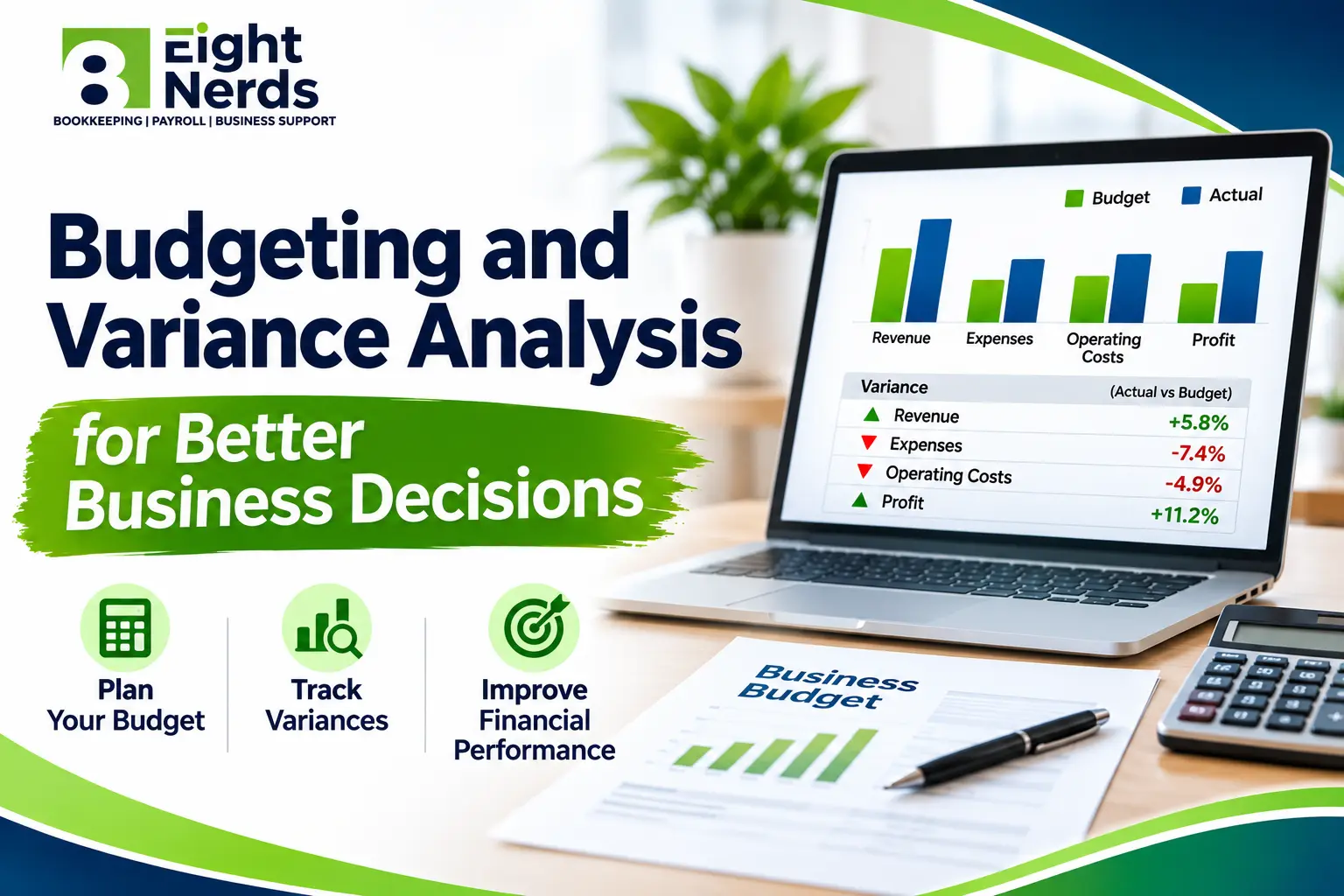
Business budgeting and variance analysis | How to monitor financial performance and control costs
A successful business is not just about generating revenue. It is equally important to understand where money is being spent, whether expenses are within expected limits and how the business is performing against its financial targets. Many companies prepare an annual budget at the beginning of the financial year, but the real challenge begins when actual business activity starts moving away from those plans. Sales may fall below expectations, supplier costs may increase, employee expenses may rise or an additional investment may put pressure on the operating budget. Without regular financial reviews, these differences can go unnoticed until they start affecting profitability and cash flow. This is where business budgeting and variance analysis become important.
A well-prepared budget gives management a financial direction, while variance analysis helps identify where actual performance differs from expectations and what needs attention. For small, medium and large organisations, combining these two processes can improve financial visibility, strengthen cost management and support better business decisions.
What Is Business Budgeting and Why Does It Matter?
Business budgeting is the process of estimating future income, expenses and financial requirements over a specific period. It helps an organisation decide how much money it expects to earn, where resources should be allocated and what financial targets it wants to achieve.
A business budget may cover operating expenses, employee costs, marketing expenditure, supplier payments, administration, technology investments and planned business expansion. A useful budget is more than a list of expected expenses. It should reflect the company’s operational goals, available resources and realistic expectations about future performance.
For example, a company planning to expand its operations may need to increase its marketing budget, hire additional employees, purchase equipment or secure a larger office. These decisions should be considered within the overall financial plan to understand their impact on the business.
A structured budgeting process helps management assess whether these investments are affordable and how they may affect future financial performance.
It also gives department managers a clearer understanding of their spending limits and financial responsibilities.
Understanding Budget Variance Analysis
Preparing a budget is only one part of financial management. Businesses also need to understand whether their actual financial results match the original plan. Budget variance analysis involves comparing actual income and expenses with the figures originally budgeted. The difference between the two is called a variance.
For example, suppose a company allocates $20,000 for marketing during a particular quarter. At the end of the quarter, the actual expenditure reaches $24,000. The business has exceeded its marketing budget by $4,000. This represents an unfavourable expense variance of 20%. However, the additional spending does not automatically mean the company has made a poor decision. Perhaps the marketing campaign generated more qualified leads, increased sales or supported the launch of a new product. Management needs to understand the reason behind the difference before deciding whether corrective action is necessary.
The same approach applies to revenue. If a business expected to generate $250,000 during a quarter but achieved only $235,000, it has a revenue shortfall of $15,000. The purpose of budget variance analysis is to understand what caused these differences, whether they were expected or unexpected and what they mean for the organisation’s financial position.
The Difference Between Favourable and Unfavourable Budget Variances
Not every difference between actual and budgeted figures indicates a problem. Some variances can be favourable, while others may require management attention. A favourable variance generally occurs when actual revenue is higher than expected or actual expenses are lower than budgeted. An unfavourable variance occurs when revenue falls below expectations or costs exceed the planned amount.
For instance, if a company budgets $50,000 for operating expenses but spends only $45,000, it appears to have achieved a favourable expense variance of $5,000. However, management should also consider why the spending was lower. Perhaps the company negotiated better supplier rates, improved operational efficiency or reduced unnecessary expenditure. Alternatively, an essential maintenance activity may have been postponed or the business may have operated below its expected capacity.
Similarly, higher spending can sometimes be justified when it supports additional revenue or improves productivity. This is why financial performance should not be judged by the numbers alone. The reasons behind each variance are just as important as the difference itself.
How to Conduct an Effective Budget Variance Analysis
An effective approach to budgeting and variance analysis begins with preparing a realistic business budget based on historical financial records, expected revenue, operating expenses and future business requirements. Once the budget is established, actual financial performance should be compared with planned figures to identify differences in income, expenses and overall spending. Regular budgeting and variance analysis helps businesses understand why costs exceed expectations, why revenue targets are missed and which departments require financial attention. By reviewing these differences, management can identify unnecessary expenses, improve resource allocation and make informed adjustments to future financial plans. Consistent budgeting and variance analysis also provides better financial visibility, helping businesses maintain cost control, improve profitability and achieve their long-term financial goals.
Start With a Realistic Business Budget
The quality of variance analysis depends heavily on the quality of the original budget. If the initial financial plan is based on unrealistic assumptions, comparing actual performance against it may not provide meaningful information. Businesses should review previous financial statements, revenue trends, regular expenses, supplier costs and expected operational changes before preparing a budget.
It is also important to consider upcoming business activities such as recruitment, new projects, product launches, equipment purchases and expansion plans. For companies operating across multiple departments or locations, each department may need its own budget while remaining connected to the organisation’s overall financial plan. A realistic business budget gives management a reliable reference point for measuring performance.
Compare Actual Financial Results With Budgeted Figures
Once the budget has been established, actual financial performance should be reviewed against the planned figures at regular intervals. This comparison should include revenue, direct costs, operating expenses, employee costs, marketing expenditure and other important financial categories. A company may discover that its sales revenue is increasing, but its operating costs are growing at an even faster rate. Although the business is generating more income, its profitability may be moving in the opposite direction.
Similarly, a department may consistently exceed its allocated spending because of higher supplier charges or additional staffing requirements. Regular comparisons help management identify these patterns instead of relying only on annual financial results.
Identify the Reasons Behind Financial Variances
Finding a difference between actual and budgeted figures is only the starting point. The next step is understanding why it happened.
A revenue shortfall could be linked to lower sales volume, changes in customer demand, delayed projects or pricing decisions. An increase in expenses may result from supplier price changes, higher employee costs, additional operating requirements or unexpected repairs.
Sometimes the difference is caused by timing rather than a genuine change in performance. For example, an invoice may have been recorded in a different accounting period or a planned expense may have been delayed.
Management should investigate significant differences before making financial decisions. This prevents businesses from responding to the wrong problem.
Review Department and Project-Level Spending
Looking only at the company’s overall financial results can hide important details.
A business may appear to be within its total budget even when individual departments are experiencing significant overspending. Savings in one department may offset additional costs elsewhere, making the overall figures look better than the underlying position.
Department-level budget monitoring provides a clearer understanding of how different parts of the organisation are performing.
For companies managing multiple projects, locations or business units, this level of reporting can be particularly useful. Management can identify where costs are increasing, which activities are delivering expected results and where additional financial attention may be required.
Take Corrective Action and Update Financial Plans
Once the reasons behind significant variances are understood, management can decide what needs to change.
This may involve reviewing supplier agreements, adjusting operational expenses, changing resource allocation, improving sales activities or revising future financial targets.
Where business conditions have changed considerably, the original budget may also need to be supported by an updated forecast. A budget provides the approved financial plan, while a forecast reflects what the business now expects to happen based on current information.
Keeping both under review helps organisations make decisions using realistic financial expectations rather than relying entirely on figures prepared months earlier.
Important Areas to Monitor During Budget Analysis
Businesses should regularly review revenue, operating expenses, employee costs, supplier payments and marketing expenditure to understand how financial performance compares with planned targets. Effective budgeting and variance analysis helps identify unexpected increases in expenses, revenue shortfalls and areas where spending may need closer attention. By reviewing actual figures against approved budgets, management can understand the reasons behind financial differences and take corrective action before they affect profitability. Consistent budgeting and variance analysis also helps departments manage resources more effectively, maintain cost control and improve financial accountability. For growing organisations, regular budgeting and variance analysis provides better financial visibility and supports informed decisions about future investments and business operations.
Revenue and Sales Performance
Revenue performance indicates whether the business is achieving its sales targets. Companies should review differences in sales volume, product performance, pricing and customer demand to understand why actual revenue may be higher or lower than expected.
Employee and Labour Costs
Employee costs can change because of recruitment, overtime, salary adjustments, additional shifts and changes in workforce requirements. Monitoring labour expenditure helps businesses understand whether staffing costs remain aligned with operational needs.
Supplier and Operating Expenses
Supplier pricing, utilities, rent, insurance and technology costs can all influence the operating budget. Reviewing these expenses regularly can help identify increasing costs and opportunities to improve purchasing decisions.
Marketing and Customer Acquisition Costs
Marketing expenditure should be reviewed alongside the results it generates. A higher marketing budget may be justified when it contributes to stronger sales or customer acquisition, but consistently increasing costs without measurable returns may require a closer review.
Capital Expenditure and Business Investments
Large purchases, equipment upgrades, technology investments and expansion projects should be monitored against their approved budgets. Significant differences can affect both the organisation’s financial commitments and its future cash requirements.
Why Regular Budget Monitoring Is Important for Growing Businesses
As businesses grow, their financial operations naturally become more complicated. A company that previously managed its expenses through a simple spreadsheet may eventually have multiple departments, larger payroll commitments, several operating locations and a wider supplier network. At this stage, annual budgeting alone may not provide enough financial visibility.
Regular budget monitoring helps management understand whether the organisation is operating within its financial plan and whether additional resources are being allocated effectively. It also supports more informed decisions about hiring, expansion, pricing, investment and operating costs.
For medium-sized and larger companies, structured budgeting and variance analysis can help connect departmental performance with broader business objectives. Instead of reviewing financial results only after a problem has developed, management can identify emerging differences and respond earlier.
How Accounting Software Helps With Budgeting and Variance Analysis
Accurate financial information is essential for meaningful budget comparisons. If transactions are recorded late, expenses are incorrectly categorised or bank accounts are not reconciled, actual figures may not provide a reliable picture of business performance. Cloud accounting platforms such as Xero, MYOB and QuickBooks can help organisations maintain organised financial records and access information for regular reporting.
Depending on the software configuration and reporting requirements, businesses can use accounting data to review income, expenses, supplier payments and other financial activity against their budget. For companies with more complex reporting needs, budgeting tools and financial management systems may also be useful for consolidating information across departments, projects and locations. Although, a software alone cannot explain why a company has exceeded its budget or missed a revenue target. Financial data still needs to be reviewed, interpreted and connected with actual business operations.
The combination of reliable bookkeeping, appropriate accounting software and regular financial analysis creates a stronger foundation for business budgeting.
How Eight Nerds Supports Business Budgeting and Financial Reporting
Managing budgets becomes more challenging when financial information is spread across different accounts, departments and reporting systems. Business owners and management teams need reliable figures to understand actual performance and make decisions about future spending. Eight Nerds supports businesses with bookkeeping, budgeting, cash flow management and financial reporting services. Our approach focuses on helping organisations maintain accurate financial records and gain better visibility over their financial activities.
Whether a business needs assistance reviewing operating expenses, monitoring budget performance or maintaining organised accounting information, having consistent financial support can make the process more manageable. With its head office in North Sydney and branches in Melbourne and Brisbane, Eight Nerds supports small, medium and large businesses across Australia. Online financial management support is also available to international clients. For businesses looking for budgeting services, financial reporting or ongoing bookkeeping support, Eight Nerds offers solutions based on their operational requirements.
Make Budgeting a Continuous Part of Business Management
A business budget should not be treated as a document that is prepared once and forgotten. Its real value comes from reviewing actual financial performance, understanding significant differences and making adjustments when business conditions change.
Budget variance analysis helps turn financial information into practical insights. It allows management to identify unexpected costs, review revenue performance, assess departmental spending and understand whether the organisation is progressing towards its financial goals. When supported by accurate bookkeeping and regular reporting, business budgeting becomes a much more useful management tool. If your organisation wants better financial visibility and more structured budget monitoring, connect with Eight Nerds to discuss your business requirements.

All Categories
Recent Posts
Getting your Business Ready for Year End | Year-End Financial Records Preparation Sydney


Accounts receivable Management – Managing overdue Customer Invoices and Debt Collection