
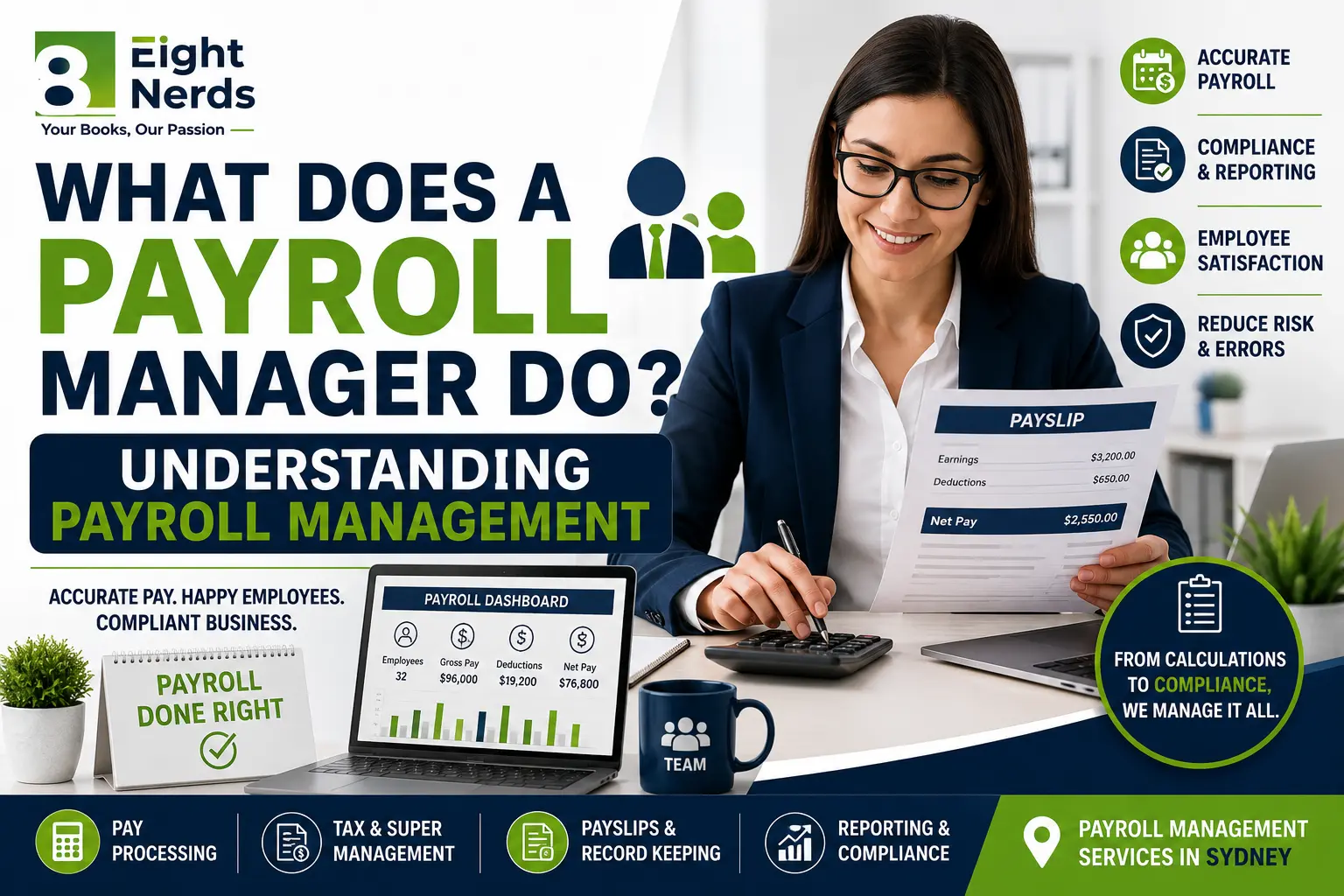
What Does a Payroll Manager Do? Understanding Payroll Management
Payroll is one of the most important financial processes in any business. Employees need to be paid accurately and on time, while employers need to manage tax withholding, superannuation, payroll records and reporting obligations. This is where Understanding Payroll Management becomes important. Payroll management is not simply about transferring salaries to employees. It involves managing the complete payroll process, from calculating wages and deductions to maintaining records and meeting Australian payroll obligations.
A payroll manager or payroll professional helps businesses make this process more organised, accurate and consistent. For businesses with multiple employees, different pay rates, leave arrangements or complex payroll requirements, professional payroll management can significantly reduce administrative pressure and payroll errors.
Understanding Payroll Management: What Does a Payroll Manager Do?
When Understanding Payroll Management, it helps to first look at the responsibilities involved in running payroll.
A payroll manager oversees the process of calculating and paying employees while ensuring the necessary payroll information is recorded and reported correctly.
Typical payroll management responsibilities include:
- Calculating employee wages and salaries
- Processing regular pay runs
- Calculating PAYG withholding
- Managing superannuation calculations and payments
- Recording employee leave
- Processing allowances, bonuses and deductions
- Preparing and issuing payslips
- Maintaining employee payroll records
- Managing Single Touch Payroll reporting
- Checking payroll data for errors
- Preparing payroll reports for management and accounting teams
The exact responsibilities can vary depending on the size and structure of the business, but the objective remains the same: employees should be paid correctly, records should be accurate, and payroll obligations should be managed properly.
Understanding Payroll Management in Australia
For Australian businesses, Understanding Payroll Management also means understanding the country’s payroll reporting and employment requirements.
Payroll can involve several areas of compliance, including:
- PAYG withholding
- Superannuation
- Single Touch Payroll (STP)
- Employee records
- Payslips
- Leave and entitlement records
- Award and employment conditions
The Australian Taxation Office explains that employers may have PAYG withholding obligations and that Single Touch Payroll allows payroll information to be reported to the ATO through STP-enabled software.
This means payroll management requires more than simply calculating an employee’s gross salary and transferring the net amount.
Why it’s necessary understanding Payroll Management: How Does the Payroll Process Work?
A typical payroll process follows several steps.
1. Collect Employee Information
Payroll begins with accurate employee information, including:
- Employee details
- Employment type
- Pay rate
- Tax information
- Superannuation details
- Leave balances
- Bank account information
2. Calculate Employee Pay
The payroll manager calculates ordinary hours, overtime, allowances, bonuses, deductions and other applicable payments.
3. Calculate PAYG Withholding
PAYG withholding is calculated based on the employee’s circumstances and the applicable ATO requirements.
4. Calculate Superannuation
Eligible employees may be entitled to superannuation guarantee contributions. The general super guarantee rate is 12% from 1 July 2025, and employers generally need to pay eligible employees’ super at least quarterly.
5. Process the Pay Run
Once calculations have been checked, the payroll is processed and employees receive their wages.
6. Issue Payslips and Complete Reporting
Employees must receive payslips within one working day of payday. Payslips must contain specific information about the employee’s pay and deductions.
Payroll information may also need to be reported through Single Touch Payroll.
Understanding Payroll Management and Employee Payslips
Payslips are an important part of Understanding Payroll Management because they provide employees with a record of how their pay has been calculated.
According to the Fair Work Ombudsman, employers must provide employees with a payslip within one working day of payday, either electronically or in hard copy. Payslips need to include information such as the employer and employee details, payment date, pay period, gross and net amounts, and applicable allowances, deductions and superannuation information.
A well-managed payroll process therefore needs to ensure that payslips are accurate as well as delivered on time.
Understanding Payroll Management and Record Keeping
Payroll records are another major part of Understanding Payroll Management.
Australian employers generally need to keep employee time and wage records for 7 years. These records can include information about pay, hours worked, leave, superannuation contributions and employment arrangements.
Good payroll record keeping can help businesses:
- Identify payroll errors
- Respond to employee questions
- Prepare accurate reports
- Meet record-keeping obligations
- Support payroll audits
- Maintain better financial records
Keeping accurate records also makes it easier for payroll and accounting professionals to review historical information when required.
Understanding Payroll Management: Common Payroll Mistakes
Payroll errors can create unnecessary financial and administrative problems.
Some common payroll mistakes include:
- Incorrect employee pay rates
- Incorrect PAYG withholding
- Missing overtime or allowances
- Incorrect leave calculations
- Late or incorrect superannuation payments
- Incorrect employee classifications
- Missing payroll records
- Incorrect payslips
- Failure to update employee information
- Errors in STP reporting
These mistakes can be particularly difficult to manage when payroll is handled manually or without a consistent review process.
The Fair Work Ombudsman states that accurate record keeping helps businesses identify payroll mistakes and keep their operations running efficiently.
Why does accuracy matters
Payroll directly affects employees, business finances and compliance.
Even a small payroll error can affect an employee’s take-home pay or entitlements. At the same time, incorrect payroll records can create additional work for business owners, accountants and payroll teams.
Accurate payroll management helps businesses maintain:
| Payroll Area | Why It Matters |
|---|---|
| Employee wages | Employees receive the correct amount |
| PAYG withholding | Helps meet tax reporting obligations |
| Superannuation | Helps ensure eligible employees receive required contributions |
| Payslips | Provides employees with accurate payment information |
| Leave records | Keeps employee entitlements organised |
| Payroll records | Supports compliance and financial reporting |
| STP reporting | Keeps payroll information reported to the ATO |
Understanding Payroll Management | When Should You Outsource Payroll?
As a business grows, payroll can become increasingly time-consuming.
A business may consider outsourcing payroll management when:
- The number of employees is increasing
- Payroll takes too much internal time
- Payroll errors are becoming frequent
- The business has complicated pay structures
- Employees regularly work overtime
- Leave management is becoming difficult
- Payroll compliance is difficult to keep up with
- Business owners want professional payroll support
Outsourcing does not mean giving up control of payroll. A professional payroll provider can manage the administrative process while the business retains oversight and approval of payroll payments.
Understanding Payroll Management and Payroll Software
Modern payroll management is usually supported by accounting or payroll software.
Software can help businesses automate parts of the payroll process, including:
- Employee records
- Pay calculations
- Payslip generation
- Leave tracking
- PAYG calculations
- Superannuation calculations
- STP reporting
- Payroll reporting
However, software does not remove the need for accurate payroll information. Incorrect employee details, pay rates or settings can still produce incorrect results.
This is why Understanding Payroll Management means understanding both the technology and the underlying payroll processes.
How 8Nerds Helps With Payroll Management
At 8Nerds, payroll management forms part of our broader bookkeeping and financial management support for Australian businesses.
Led by Tapish Arora, Founder of 8Nerds, our team brings more than 12 years of accounting experience, including experience with prestigious CA firms and Top 10 accounting firms in Australia.
Our payroll support can help businesses manage:
- Payroll processing
- Employee pay calculations
- Payroll records
- Payslips
- Superannuation information
- PAYG withholding
- Payroll reporting
- Integration with bookkeeping and accounting processes
By keeping payroll organised alongside bookkeeping, businesses can maintain more accurate financial records and reduce the administrative burden associated with managing employees.
Understanding Payroll Management: Payroll Manager vs Bookkeeper
A payroll manager and bookkeeper can have overlapping responsibilities, particularly in smaller businesses.
| Payroll Manager | Bookkeeper |
|---|---|
| Focuses primarily on employee payroll | Manages broader financial records |
| Processes wages and salaries | Records income and expenses |
| Manages payroll records | Reconciles bank accounts |
| Handles payroll reporting | Manages accounts payable and receivable |
| Tracks employee payroll data | Prepares financial reports |
| Manages payroll-related compliance | Supports broader bookkeeping requirements |
In smaller businesses, one professional may handle both functions. In larger organisations, payroll and bookkeeping may be separate responsibilities.
Frequently Asked Questions About Understanding Payroll Management
What is payroll management?
Payroll management is the process of calculating employee pay, managing deductions and withholding, processing wages, maintaining payroll records, issuing payslips and completing relevant payroll reporting.
What does a payroll manager do?
A payroll manager oversees the payroll process, including employee pay calculations, PAYG withholding, superannuation, payslips, payroll records, reporting and payroll data accuracy.
Why is payroll management important?
Effective payroll management helps employees receive accurate and timely payments while helping businesses maintain organised payroll records and meet relevant tax and employment obligations.
How often should payroll be processed?
Payroll frequency depends on the business and employment arrangements. Businesses may process payroll weekly, fortnightly or monthly, provided they meet applicable employment requirements.
What is Single Touch Payroll?
Single Touch Payroll, or STP, allows employers to report employee payroll information to the ATO through STP-enabled payroll software.
How long should payroll records be kept in Australia?
Employers generally need to keep employee time and wage records for seven years.
What is the current superannuation guarantee rate?
The general superannuation guarantee rate is 12% from 1 July 2025.
Understanding Payroll Management
Understanding Payroll Management is important for every business with employees because payroll involves much more than paying wages.
From calculating employee pay and PAYG withholding to managing superannuation, payslips, employee records and Single Touch Payroll reporting, an organised payroll process helps businesses maintain accuracy and meet their obligations.
For businesses that do not have the time or internal resources to manage these responsibilities, professional payroll management can provide a practical solution.
With the right processes, accurate records and professional support, payroll becomes easier to manage, easier to review and less likely to create unexpected problems for your business.
Why choose 8 Nerds?
Eight Nerds is a Sydney-based bookkeeping and financial management firm helping Australian businesses simplify their finances through professional bookkeeping, payroll management, BAS support, cash flow management, and accurate financial reporting. Led by Tapish Arora, with 12+ years of accounting experience and experience working with prestigious CA and Top 10 accounting firms in Australia, Eight Nerds helps businesses maintain organised, up-to-date financial records so they can make informed decisions and focus on growth.

All Categories
Recent Posts

What is Business Expense Management ? How Australian Businesses Can Control Rising Costs