
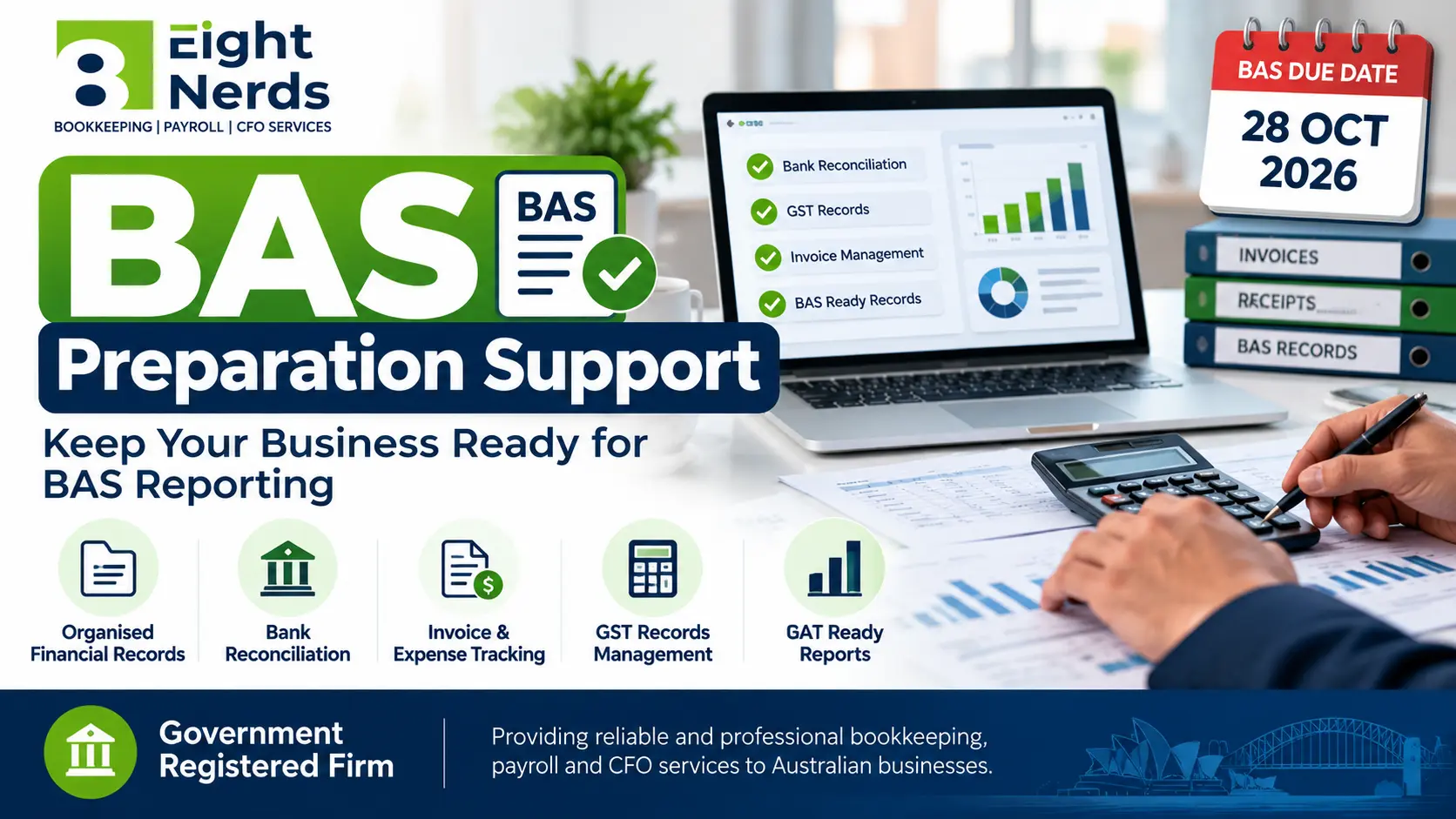
BAS preparation support services for Australian businesses – How to keep your records accurate and ready
Preparing a Business Activity Statement (BAS) and also managing business same time can be distressing and time consuming when financial records are incomplete, invoices are missing or bank transactions have not been reconciled. Many Australian businesses leave these tasks until the reporting deadline approaches, only to discover that their accounting records need more work than expected. The result can be unnecessary pressure, delays and difficulty understanding the figures being reported. BAS preparation support helps businesses establish a more organised process for reviewing financial records before reporting obligations are due.
Rather than trying to find missing documents at the last minute, businesses can keep transactions updated, reconcile accounts regularly and ensure that relevant GST and other reporting information is supported by accurate records.
For businesses registered for GST, a BAS may involve reporting GST, PAYG withholding, PAYG instalments and other obligations relevant to their registrations. The information required depends on the business and its reporting arrangements. Understanding what needs to be reported and keeping the supporting records organised throughout the period makes the process more manageable.
For Australian business owners, effective BAS preparation is not simply about completing a form. It is about maintaining reliable bookkeeping records, understanding the financial information behind the figures and being better prepared when it is time to report to the Australian Taxation Office (ATO).
Why BAS Preparation Should Start Before the Deadline
One of the common mistakes businesses make is treating BAS preparation as a task that only needs attention a few days before lodgement. By that stage, several months of transactions may have accumulated, supplier invoices may be difficult to locate and payments received from customers may not have been matched correctly.
These problems can take time to resolve, especially when a business has a high transaction volume or several bank accounts. A discrepancy that could have been investigated during routine bookkeeping may become much harder to trace when the reporting deadline is close.
A consistent approach to BAS preparation support helps prevent this situation. When sales, purchases, expenses and bank transactions are reviewed regularly, missing information can be identified while the details are still easy to confirm.
This also gives business owners more time to ask their accountant or registered BAS agent about unusual transactions, GST treatment or previous reporting adjustments. Instead of rushing to complete the reporting process, they can work from a more reliable set of financial records. The aim is to make BAS preparation part of the normal financial management process rather than a separate task that creates pressure every quarter.
Understanding What Your Business Needs to Report | Eight Nerds AU Govt authorized accounting firm
A Business Activity Statement is used by businesses to report certain tax obligations and amounts to the ATO. The fields that apply depend on the business’s registrations and whether it reports monthly, quarterly or under another permitted arrangement.
GST is one of the most familiar components. Businesses registered for GST generally need to account for GST collected on taxable sales and eligible GST credits on purchases, subject to the applicable rules. Depending on the business, the BAS may also include PAYG withholding from employee payments, PAYG instalments or other relevant amounts.
This distinction matters because not every business has the same reporting requirements. An employer may need to account for amounts withheld from wages, while a business without employees may have a different set of reporting obligations.
Good BAS preparation support begins by understanding which reporting fields apply and ensuring that the underlying bookkeeping records reflect those activities correctly. Completing fields without checking the supporting information can create discrepancies that need to be investigated later.
Business owners should refer to their activity statement and the ATO’s official guidance to confirm what applies to their circumstances. The Australian Government’s Business Activity Statement guide explains the reporting process and the available lodgement methods.
Bringing Invoices, Receipts and Bank Transactions Together
Accurate BAS reporting depends on financial records that can support the figures being reported. If purchase invoices are missing, customer receipts have not been recorded or bank transactions remain unreconciled, it becomes harder to establish whether the accounting information is complete. Start by reviewing the business bank accounts and credit card statements for the reporting period. Transactions recorded in the accounting system should be compared with the relevant statements, and any differences should be investigated rather than adjusted simply to make the balances match.
Sales invoices and customer receipts also need attention. A payment may have arrived in the bank account without being matched against the correct invoice, while a sales transaction may have been recorded incorrectly or omitted from the books. Supplier invoices and receipts should be organised so that the business can identify the purpose of each purchase and determine its correct accounting and GST treatment. A bank payment alone does not necessarily provide enough information to establish whether a GST credit can be claimed.
These checks form an important part of BAS preparation support because they help businesses identify missing documents and questionable transactions before the reporting figures are finalised.
Keeping records organised throughout the year also makes it easier to respond if an accountant, registered BAS agent or the ATO needs further information.
Getting GST Treatment Right Before You Report
A transaction may be a genuine business expense without automatically qualifying for a GST credit. The correct treatment depends on factors such as the nature of the purchase, the applicable GST rules and the available supporting documentation. For example, a business might pay for software, equipment, travel, professional services or supplies. Each transaction needs to be recorded according to its actual circumstances rather than assigned a GST category simply because it appears in the bank statement.
Transactions may also involve GST-free sales, input-taxed supplies or purchases where GST credits are restricted or unavailable. Incorrect categorisation can affect both the reported figures and the usefulness of the business’s financial reports.
When preparing BAS records, review transactions that appear unusual, large purchases that need a closer look and entries where the GST treatment is unclear. If the correct treatment cannot be established from the available information, seek appropriate advice instead of making an assumption. Reliable bookkeeping helps make this review more manageable because transactions are recorded consistently and supporting documents are easier to retrieve. It also allows the business to identify recurring errors and improve its process for future reporting periods.
Keeping Payroll Information Consistent With Your Accounts
Businesses with employees need to pay attention to payroll information as part of their wider bookkeeping process. Salary payments, PAYG withholding and relevant payroll liabilities need to be recorded consistently so that the business’s financial records reflect its employment activities.
Problems can arise when payroll reports do not match the amounts recorded in the accounting system, when payments are assigned to the wrong accounts or when payroll information is not updated promptly. For example, if an employer has withheld tax from employee payments, the relevant records should agree with the payroll information used for reporting. Any difference needs to be investigated before the figures are relied upon.
Payroll reconciliation also helps management understand the total cost of employing staff and identify outstanding amounts that may affect cash flow.
Where payroll obligations are relevant to the BAS, organised payroll records form part of effective BAS preparation support. Businesses should also review their separate payroll and superannuation obligations rather than assuming that completing a BAS addresses every employment-related requirement.
What Happens When Your Bookkeeping Falls Behind
Sometimes the main challenge is not the BAS itself, but the condition of the bookkeeping records. A business may have several months of transactions waiting to be categorised, invoices stored across different email accounts and bank reconciliations that have not been completed.
Trying to resolve this entire backlog immediately before lodgement can make the process unnecessarily difficult. Missing transactions may be duplicated, expenses may be categorised incorrectly and important differences may be overlooked because there is limited time to investigate them.
A better approach is to establish which reporting period is incomplete, gather the supporting documents and work through the outstanding transactions systematically. Start with the earliest incomplete records where practical, then reconcile accounts and investigate differences before relying on the resulting reports.
Businesses should also review previous BAS submissions if they discover that an earlier period may contain an error. Changing an entry in the accounting system does not automatically correct a statement already lodged with the ATO. Whether an adjustment or revision is appropriate depends on the circumstances, so guidance from a registered tax or BAS agent may be needed.
Professional bookkeeping support can help businesses bring records up to date and create a more consistent process for future reporting periods.
Planning for the BAS Payment Before It Becomes Urgent
Preparing a BAS is not only about reporting accurate figures. Businesses also need to understand whether a payment will be due and how it may affect their available cash.
A business can be generating sales and still face pressure when the time comes to pay its GST or other liabilities. Some of the money collected may need to be set aside for tax obligations, while supplier payments, wages and operating expenses continue to draw on the same bank balance.
Regular bookkeeping helps establish a clearer picture of expected obligations. When financial records are kept up to date, management can review current figures, monitor cash movements and plan for upcoming payments rather than discovering the amount at the last minute.
Cash-flow forecasting can also help identify periods when customer payments may arrive later than expected or when several significant expenses fall due together.
Effective BAS preparation support therefore connects accurate reporting with practical financial planning. By understanding both the amount that may be payable and when the payment is expected, a business can make better decisions about spending, working capital and upcoming commitments.
Staying Ahead of BAS Reporting Dates
The appropriate BAS deadline depends on the business’s reporting cycle, lodgement arrangements and any applicable extensions. Businesses that report quarterly should not automatically assume that every quarter has the same date as their own circumstances may be affected by agent arrangements or other concessions.
For example, the standard due date for the July–September 2026 quarterly BAS is 28 October 2026. Eligible businesses may have different deadlines under certain lodgement arrangements, so the date on the activity statement or the ATO’s online services should be checked before relying on a general calendar.
Keeping a reporting calendar can help businesses organise bank reconciliation, invoice collection and financial reviews ahead of the due date. It is also useful to assign responsibility for gathering records and checking outstanding information so that the work is not left to one person at the last minute.
The ATO’s BAS due-date guidance provides information on reporting and payment dates. If the business uses a registered tax or BAS agent, confirm the deadline applicable to the arrangement.
A regular preparation process gives the business more time to investigate questions and address missing information before the statement is due.
How Eight Nerds Helps Businesses Keep Their Records BAS-Ready
At Eight Nerds, we understand that business owners need organised financial records, not another last-minute administrative burden. Consistent bookkeeping helps businesses keep transactions updated, locate supporting documents and understand the financial information behind their reporting obligations.
Eight Nerds provides bookkeeping and financial support for Australian businesses, including transaction recording, bank reconciliation, expense categorisation and financial reporting. These services can help businesses maintain more organised records and identify discrepancies that need attention before reporting information is finalised.
For businesses with broader requirements, payroll management and Virtual CFO support can also help improve the way financial information is maintained, reviewed and used for planning.
BAS-related work must be handled within the applicable Australian regulatory requirements. Under the rules administered by the Tax Practitioners Board (TPB), services that meet the legal definition of a BAS service generally require the provider to be appropriately registered unless an exemption applies. Businesses should verify the registration and scope of any provider they engage for BAS advice or lodgement through the TPB register.
By maintaining organised bookkeeping records and working with the appropriate registered professional when required, businesses can establish a more dependable reporting process. Eight Nerds can discuss bookkeeping and financial record support that fits the business’s operations and reporting needs.
Frequently Asked Questions About BAS Preparation Support
What is BAS preparation support?
BAS preparation support involves getting the bookkeeping records and supporting information ready for a business activity statement. This may include reviewing transactions, reconciling accounts, organising invoices and checking that relevant GST and payroll-related records are complete.
The exact work required depends on the business’s registrations, reporting obligations and the condition of its records. Services that legally qualify as BAS services must be provided in accordance with the applicable registration requirements.
What records should be organised before preparing a BAS?
Businesses may need bank statements, sales invoices, supplier invoices, receipts, expense records, GST information and relevant payroll reports. The records required depend on which obligations apply to the business.
Keeping these documents organised throughout the reporting period makes it easier to reconcile transactions and investigate discrepancies before the figures are finalised.
How can accurate bookkeeping make BAS reporting easier?
Accurate bookkeeping helps ensure that sales, expenses, payments and GST-related transactions are recorded consistently. It also makes supporting documents easier to retrieve and helps identify unusual transactions before they affect the reporting figures.
When the books are updated regularly, businesses have less work to complete immediately before a BAS deadline.
Does every business need to lodge a BAS?
Not every business has identical reporting obligations. Businesses registered for GST generally need to report according to their applicable arrangement, and other obligations may apply depending on their registrations and circumstances. Check the ATO’s guidance or consult a registered tax or BAS agent to confirm what your business needs to lodge.
Can Eight Nerds help if my bookkeeping is behind?
Eight Nerds can discuss bookkeeping support to help organise incomplete records, review transactions and reconcile accounts. The work required depends on how far behind the records are and whether there are unresolved discrepancies or previous reporting issues. Where advice or lodgement constitutes a BAS service, ensure the provider is appropriately registered with the TPB.
Build a More Reliable BAS Preparation Process With Eight Nerds
BAS reporting becomes more manageable when the underlying bookkeeping records are accurate, organised and reviewed regularly. Missing invoices, unreconciled transactions and incorrect GST categorisation can create unnecessary pressure, while a consistent financial process helps businesses identify issues earlier.
Effective BAS preparation support starts with maintaining reliable records, checking transactions against supporting documents and planning ahead for reporting dates and possible payments. These practices also improve the quality of financial information available for cash-flow planning and everyday business decisions.
Eight Nerds provides bookkeeping and financial support to help Australian businesses maintain organised financial records and improve visibility over their finances. Whether you need help bringing overdue records up to date or creating a more consistent process for the future, the right support can make financial administration easier to manage.
Contact Eight Nerds to discuss professional bookkeeping and financial record support tailored to your business.

All Categories
Recent Posts


What is Business Expense Management ? How Australian Businesses Can Control Rising Costs