Your business can generate super strong sales, welcome new customers and continue to grow, yet still struggle to make enough money. The reason is simple, revenue and profit are not the same thing. Understanding revenue vs profit is inportant for business owners who want to know whether their company is genuinely performing well or simply generating more sales while expenses continue to rise.
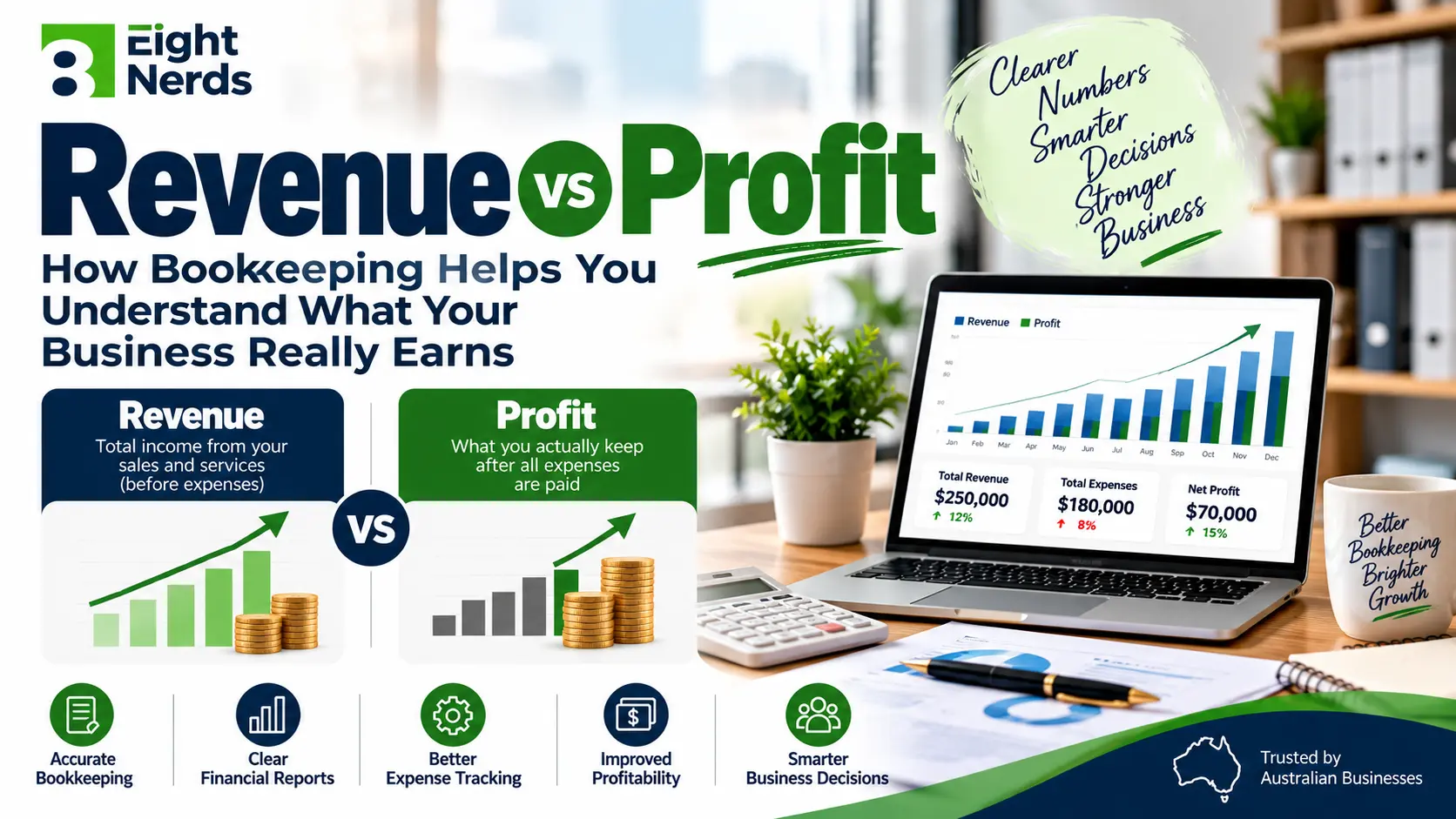
Revenue shows how much income a business generates from its sales and services before expenses are deducted. Profit shows what remains after the relevant costs have been accounted for. Although the difference sounds straightforward, understanding what your business really earns requires more than looking at sales figures or checking the money available in your bank account.
This is where bookkeeping becomes important. Accurate bookkeeping helps businesses keep track of income, expenses, supplier payments, customer invoices and other financial transactions. When these records are maintained properly, business owners can understand where their money comes from, where it goes and how much the business actually retains.
For growing Australian businesses, understanding revenue vs profit is not just an accounting exercise. It is a practical way to make better decisions about pricing, expenses, cash flow and future growth.
Growing Sales Don’t Always Mean Growing Profits | Revenue vs Profit
Revenue is often the first number business owners look at when measuring performance. An increase in sales can indicate stronger demand, successful marketing or expansion into new markets. However, higher revenue does not automatically mean that a business is becoming more profitable.
Imagine a company that generates $100,000 in revenue during a month and incurs $90,000 in relevant expenses. For a simplified example, that leaves $10,000 in profit before any additional costs that have not been included. If the company generates the same $100,000 in revenue the following month but its expenses increase to $97,000, the amount remaining falls to $3,000.
The business has generated the same revenue, but its profit has declined considerably.
This can happen when supplier prices rise, payroll expenses increase, marketing becomes more expensive or additional operating costs start accumulating. The business may continue to appear successful because sales remain strong, while the financial benefit of those sales gradually decreases.
Understanding revenue vs profit helps business owners look beyond turnover and examine whether their sales are generating a worthwhile financial return. Growth is valuable, but it needs to contribute to the long-term financial health of the business rather than simply increase the amount of work being done.
Understanding What Revenue and Profit Actually Tell You
Revenue, gross profit and net profit each reveal a different part of a business’s financial performance.
Revenue represents income generated through ordinary business activities before expenses are deducted. For example, a company providing professional services may generate revenue through client fees, while a retailer generates revenue by selling products.
Gross profit shows what remains after deducting the direct costs associated with producing or delivering those products and services. It helps management understand whether the core business activity is generating enough value after its direct costs.
Net profit goes further by accounting for operating expenses and other relevant costs. Depending on the reporting basis, the final calculation may also reflect financing costs, depreciation, tax and other items. It provides a broader view of what the business earns after the applicable expenses are considered.
Looking at only one of these figures can create an incomplete picture. A retailer may generate substantial revenue but experience pressure on gross profit because stock has become more expensive. A professional services company may maintain strong gross margins but see net profit decline because payroll, rent and administrative expenses have increased.
A useful revenue vs profit analysis considers these measures together. This makes it easier to identify where financial performance is changing and which costs or activities may need closer attention.
How Bookkeeping Helps You Track Where the Money Goes | Revenue vs profit
Bookkeeping creates the financial foundation a business needs to understand its performance. It involves recording and organising transactions, reconciling bank accounts, maintaining supporting documents and categorising income and expenses correctly.
When bookkeeping is up to date, business owners can see how much revenue has been recorded, what expenses have been incurred and which payments are still outstanding. This information makes it easier to understand the relationship between sales and profitability rather than relying on estimates or incomplete records.
Consider a growing business that receives payments from several customers while also paying suppliers, employees and service providers. Without an organised bookkeeping process, it can become difficult to identify which expenses belong to which period, whether all transactions have been recorded and whether financial reports reflect the actual activity of the business.
Professional bookkeeping helps bring this information together. Bank reconciliations can identify unmatched transactions, consistent expense categories make spending easier to review, and properly maintained records support meaningful profit and loss reporting.
This is why bookkeeping is so closely connected to revenue vs profit. Before a business can understand what it really earns, it needs reliable information about what it has earned and what it has spent.
The Hidden Costs That Can Eat Into Your Profits | How bookkeeping firm can help you
Profitability problems do not always begin with a major expense. Often, they develop through small increases that gradually affect the overall financial result.
A business may pay more for supplies, add new software subscriptions, increase employee hours or spend more on delivery and customer support. Each individual cost may appear reasonable, but together these expenses can reduce the amount retained from revenue.
Accurate bookkeeping makes these changes easier to identify. When expenses are recorded consistently, management can compare spending across different months and investigate areas where costs have increased faster than expected.
The objective is not to cut every expense. Some costs are necessary to maintain quality, improve productivity or support growth. The more useful question is whether the money being spent is delivering the expected value.
For example, a business may be spending more on marketing because it wants to attract additional customers. If sales increase but the cost of acquiring and serving those customers rises even faster, the additional revenue may not improve profitability as expected.
Regular financial reporting helps management understand these relationships and make more informed decisions about spending, pricing and operational efficiency.
Are Your Prices Leaving Enough Room for Profit?
Pricing decisions have a direct effect on profitability, but businesses sometimes set prices mainly by looking at competitors or responding to customer expectations. A price that appears competitive may not necessarily cover the actual cost of delivering the product or service.
A business needs to understand its cost structure before deciding whether its prices are financially sustainable. Supplier costs, employee time, materials, delivery, software fees and allocated operating expenses can all influence the final return generated by a sale.
Bookkeeping provides the records needed to analyse these costs, while business profitability analysis helps management understand how they affect margins.
For example, a company may discover that a particular service requires significantly more staff time than originally expected. The service may generate considerable revenue, but the profit remaining after delivery costs may be lower than anticipated.
Similarly, frequent discounts can increase sales volume while reducing the amount earned from each transaction. Without reviewing the numbers, management may overlook the effect of these decisions on overall profitability.
Understanding revenue vs profit allows businesses to examine whether their pricing decisions support their financial objectives instead of focusing exclusively on generating more sales.
Why a Profitable Business Can Still Run Short of Cash
Profit and cash flow are closely related, but they measure different things. Profit reflects the financial result of business activities, while cash flow tracks the movement of money into and out of the business.
A business may record revenue after issuing an invoice but still be waiting for the customer to pay. During that time, the company may need to pay wages, rent, suppliers and other operating expenses. The profit may appear in its financial records before the corresponding cash has reached its bank account.
Inventory can create a similar situation. A retailer may purchase stock well before it is sold, tying up cash that could otherwise be available for operating expenses or future investment.
This is why business owners should not look at revenue vs profit without also considering cash flow. A company can report a profit but still face pressure when payments arrive later than expected or major expenses become due.
Accurate bookkeeping helps maintain visibility over customer invoices, supplier commitments, bank balances and other cash movements. When combined with cash flow forecasting, this information helps management plan ahead and understand whether the business has enough working capital to meet its obligations.
Keeping Your GST and BAS Records in Order
Australian businesses also need to maintain financial records that support their relevant tax and reporting obligations. For businesses registered for GST, transactions must reflect the appropriate GST treatment, and the underlying information needs to be available for Business Activity Statement preparation.
GST collected from customers should not simply be treated as money the business can keep as profit. For GST-registered businesses, these amounts are generally accounted for separately from sales revenue, subject to the applicable GST rules and accounting treatment.
Bookkeeping helps businesses maintain this distinction by recording transactions appropriately, organising invoices and receipts, and keeping bank accounts reconciled. It also supports the review of expenses and income before financial information is used for reporting.
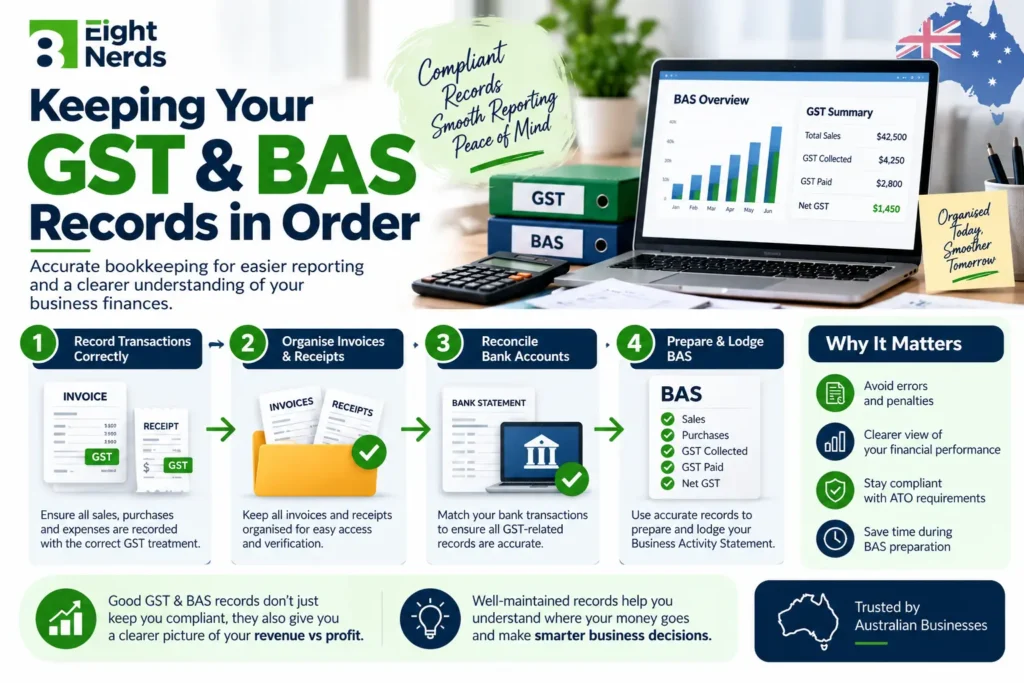
When records are incomplete or transactions are incorrectly categorised, it becomes more difficult to understand the business’s actual financial performance. Errors can also create additional work when preparing reports or working with an accountant.
Maintaining organised records throughout the year makes it easier to understand revenue vs profit while supporting a more reliable financial reporting process.
Making Sense of Your Financial Reports
Recording transactions is only part of managing business finances. Business owners also need to review the information regularly to understand what is changing and why.
A profit and loss report can show how revenue, direct costs and operating expenses have changed over time. Comparing current results with previous periods helps identify whether margins are improving, expenses are rising or the business is earning less from its sales.
For example, if revenue increases but net profit falls, management can investigate supplier costs, payroll, discounting, advertising expenditure or other operating expenses. Rather than guessing what has happened, the business can use its financial records to identify the areas that deserve attention.
Reliable bookkeeping makes these comparisons more meaningful because transactions are recorded consistently and reports are based on more complete information.
For many growing businesses, reviewing financial performance monthly provides a useful routine. It allows management to identify emerging patterns, review budgets and respond to changes before they become more difficult to manage.
The purpose of financial reporting is not simply to produce statements. It is to help business owners understand what their numbers are telling them and use that information to make better decisions.
Which Products, Services and Customers Are Actually Profitable?
A business can be profitable overall while certain parts of its operations deliver weaker financial results. This becomes particularly important as a company introduces additional products, serves different customer groups or expands across multiple locations.
A product that sells in high volumes may have a relatively low margin after purchasing costs, delivery charges, payment fees and other relevant expenses are considered. A service that generates less revenue may deliver a better financial return because it requires fewer resources to complete.
Bookkeeping provides the underlying financial information needed to examine these differences. When this information is combined with profitability analysis, management can understand how products, services, customers or locations contribute to the overall result.
For a professional services company, the review may focus on project costs, staff utilisation and service fees. For a retailer, it may involve inventory costs, discounts and the margins generated by different products. A multi-location business may need to compare revenue, payroll and operating expenses across its locations.
These insights can support more informed decisions about pricing, resource allocation and future investment. Instead of assuming that every source of revenue contributes equally to business success, management can identify where the strongest financial returns are being generated.
When It’s Time to Get Professional Bookkeeping Support
As a business grows, its financial processes often become more complicated. Higher transaction volumes, additional employees, more suppliers and multiple revenue streams can make bookkeeping increasingly time-consuming.
Some businesses reach a point where bank reconciliations fall behind, expenses are recorded inconsistently or financial reports are not available when management needs them. Others have bookkeeping in place but do not have enough time or internal resources to review the information regularly.
Professional bookkeeping support can help establish more reliable processes for transaction recording, reconciliation, expense categorisation and financial reporting. It can also give business owners more time to focus on their operations while ensuring that the underlying financial information remains organised.
For established businesses with broader financial needs, bookkeeping may also work alongside payroll management, accounts payable and receivable, BAS support and Virtual CFO services.
These services have different responsibilities, but they depend on the same foundation: accurate, well-maintained financial information.
How Eight Nerds Helps You Understand Your Business Finances
A 5 star Rated Bookkeeping firm like Eight Nerds understand that business owners need more than a record of how much they have sold. They also need reliable information about expenses, outstanding payments, financial performance and the costs that affect their profits.
Our professional bookkeeping services help Australian businesses maintain organised financial records, record and categorise transactions, reconcile accounts and improve the quality of their financial information. This creates a stronger foundation for understanding revenue, reviewing expenses and assessing profitability.
Eight Nerds also provides payroll management, accounts support, financial reporting and Virtual CFO services for businesses that need broader financial assistance as their operations develop. By connecting day-to-day bookkeeping with regular financial review and planning, businesses can build a clearer picture of their financial position.
Whether you operate a small business, a growing company or a larger organisation, accurate bookkeeping helps you understand the difference between generating sales and actually earning a profit.
With the right records and regular financial reporting, your business can move beyond tracking turnover and develop a more complete understanding of its financial performance.
Frequently Asked Questions About Revenue vs Profit
What’s the Difference Between Revenue and Profit?
Revenue is the income a business generates from its ordinary activities before expenses are deducted. Profit is what remains after the relevant costs and expenses have been accounted for. A business can generate high revenue without retaining a substantial profit.
Can a Business Have High Revenue but Low Profit?
Yes. High supplier costs, payroll expenses, operating costs, discounts and other expenditure can reduce the amount retained from revenue. Reviewing both income and expenses helps explain why strong sales do not always lead to stronger profitability.
How Does Bookkeeping Help Improve Profitability?
Bookkeeping maintains organised records of income and expenditure, supports bank reconciliation and provides the information needed for financial reporting. These records help business owners identify rising costs, understand margins and make decisions based on a clearer picture of financial performance.
How Often Should You Review Revenue and Profit?
Many businesses benefit from reviewing their financial performance monthly. The appropriate frequency depends on the size and complexity of the business and how quickly its financial position can change.
Does Making a Profit Mean You Have Enough Cash?
No. Profit and cash flow measure different aspects of financial performance. A business can be profitable while waiting for customer payments or committing cash to inventory, suppliers and other expenses.
Better Bookkeeping Starts With Understanding Your Numbers
Revenue growth is important, but it does not tell the whole story. Understanding how revenue translates into profit requires accurate records, consistent expense tracking and regular financial review.
When bookkeeping is properly maintained, business owners can see more clearly how much they earn, where money is being spent and which parts of the business contribute most effectively to financial performance.
Eight Nerds provides professional bookkeeping and financial support to help Australian businesses maintain reliable records and gain better visibility into their numbers. From routine bookkeeping to financial reporting and Virtual CFO support, our services are designed to help businesses understand their finances as they grow.
Contact Eight Nerds to discuss professional bookkeeping services and build a clearer picture of what your business really earns.