What is Business Expense Management? While you’re running a business, it becomes more expensive as it grows. New employees, higher supplier prices, software subscriptions, rent, insurance and everyday operating costs can gradually increase the amount of money needed to keep things running. While some expenses are necessary for growth, problems arise when costs continue to rise without a clear understanding of how they affect profitability. This is where business expense management becomes an important part of running a financially healthy business.
Many Australian business owners know how much revenue they generate but have less visibility into where their money is going. Financial records may be spread across accounting software, bank accounts, credit cards and supplier invoices. Individual expenses may appear manageable, yet their combined effect can reduce profit margins and create pressure on cash flow.
The solution is not simply to cut spending. Businesses need to understand which expenses are necessary, which costs are increasing unexpectedly and whether the money being spent is delivering the expected value. Accurate bookkeeping, regular financial reporting and a consistent review process can help businesses make these decisions with greater confidence. For growing businesses, effective business expense management is about maintaining control without limiting the investments needed to move forward.
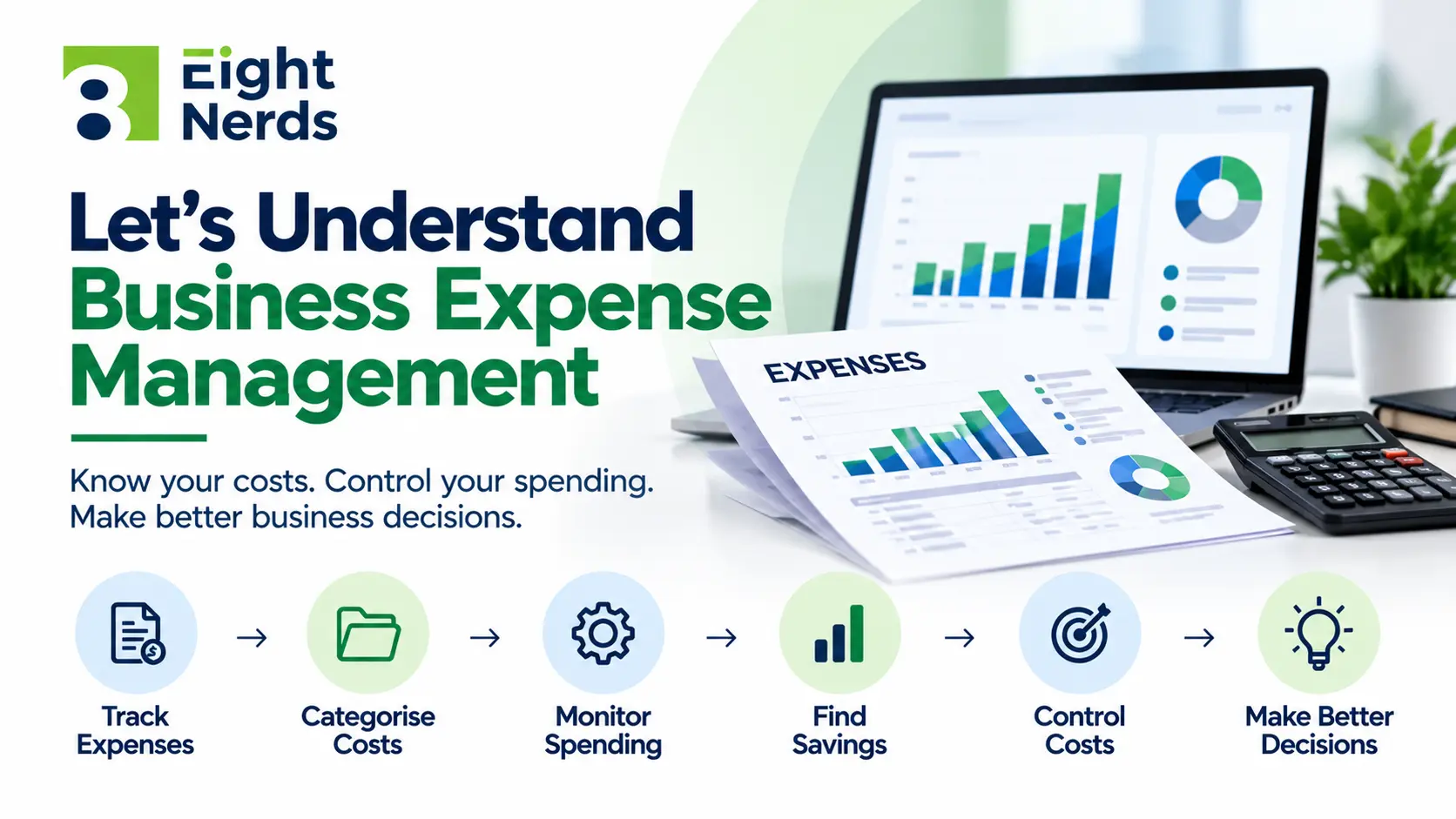
Let’s Understand Business Expense management
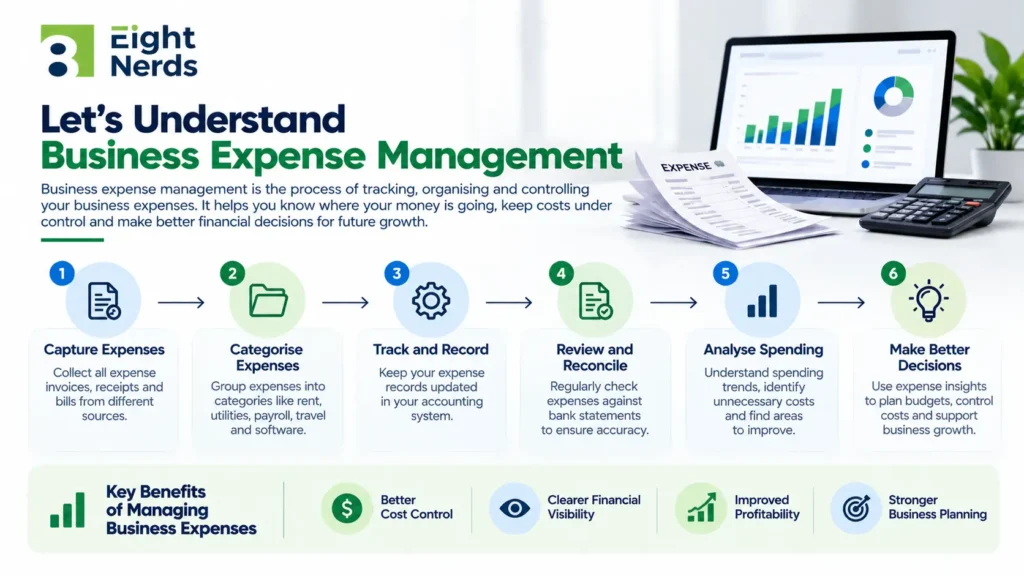
Business expense management is about knowing where your money goes, why costs are increasing and how those expenses affect your profits. From supplier invoices and payroll to software subscriptions, rent, marketing and daily operating costs, every expense needs to be recorded and reviewed properly. Accurate bookkeeping helps businesses categorise expenses, reconcile transactions and identify unusual spending, while comparing actual costs against budgets can reveal areas where savings may be possible. The goal is not simply to cut costs, but to make sure business spending supports productivity, profitability and future growth. With organised financial records and regular reporting, Eight Nerds helps businesses gain better visibility over their expenses and make more informed financial decisions.
When Business Expenses Start Growing Faster Than Revenue
One of the earliest signs of a financial problem is a widening gap between revenue growth and profit growth. Sales may be increasing, but if the cost of generating those sales rises at a faster rate, the business can end up earning less from each dollar of revenue.
Consider a company that expands its team to serve more customers. The additional employees help increase sales, but recruitment costs, wages, superannuation, equipment and software also increase. If the new revenue does not adequately cover these additional costs, the expansion may put pressure on profitability.
Similar situations occur when businesses increase marketing budgets, move into larger premises or introduce new products. The decision itself may be reasonable, but its financial impact needs to be monitored.
Business expense management helps management compare changes in spending with changes in business performance. Instead of looking at expenses in isolation, owners can assess whether additional costs are supporting revenue, improving efficiency or creating measurable business value.
Start by Understanding Where Your Money Goes | Expense tracking , Bookkeeping
Before reducing costs, a business needs a reliable picture of its current spending.
This begins with bookkeeping. Transactions need to be recorded consistently, bank accounts reconciled and expenses categorised according to their actual purpose. When records are incomplete or expenses are grouped incorrectly, it becomes much harder to understand which areas of the business are consuming the most money.
Reviewing spending through the accounting system can reveal patterns that are not obvious from individual bank transactions. Recurring subscriptions, supplier payments, employee expenses and operational costs may each appear relatively small, but together they can have a meaningful impact on the financial result.
Accurate bookkeeping also helps identify duplicated transactions, unexpected charges and payments that require further investigation. It creates a dependable starting point for business expense management because decisions can be based on recorded information rather than estimates.
For businesses with higher transaction volumes, maintaining this level of visibility becomes increasingly important. Regular reviews are generally easier to manage than trying to reconstruct months of spending at the end of a reporting period.
Find the Expenses That Are Quietly Reducing Profit
Not every expense increase is obvious. A supplier may gradually raise prices, delivery charges may change, or additional software tools may be introduced as the business grows. These costs can accumulate without attracting much attention.
A useful expense review examines how spending has changed over time and whether those changes are justified by business activity. Comparing expenses with previous periods can help identify categories that have increased unexpectedly or are taking up a larger share of revenue.
For example, a business might discover that its software expenditure has increased because different teams subscribed to overlapping tools. Another company might find that supplier costs have risen while its own selling prices have remained unchanged.
Business expense management helps bring these patterns into view. Once a cost increase has been identified, management can investigate the reason and decide whether to renegotiate terms, change a process, improve utilisation or accept the additional expense because it supports an important business objective.
The purpose is to understand costs well enough to make considered decisions, rather than reacting to every increase with an immediate budget cut.
Keep Bookkeeping Accurate Before Making Cost Decisions
Financial decisions are only as reliable as the information behind them. If supplier invoices have not been entered, expenses are recorded in the wrong categories or bank transactions remain unreconciled, management may be looking at an incomplete picture of spending. A cost category might appear lower than it actually is simply because some transactions have not yet been recorded.
This is why bookkeeping should be kept up to date before major cost decisions are made. Bank reconciliation helps confirm that transactions recorded in the accounting system agree with bank activity, while accurate expense categorisation makes financial reports more useful.
Businesses should also check that expenses are assigned to the appropriate reporting periods and that unusual transactions have been investigated. Where accounting treatment is unclear, advice from a qualified bookkeeper or accountant can help avoid incorrect adjustments.
Reliable bookkeeping turns business expense management from a rough estimate into a more structured financial process. It allows owners to compare spending more confidently, identify potential problems and understand whether a change in expenses has genuinely affected profitability.
Look Beyond the Price When Reviewing Suppliers
Supplier costs are an important part of financial management, particularly for businesses that purchase inventory, materials or outsourced services. When costs rise, it can be tempting to move immediately to the cheapest available supplier.
The lowest price does not always represent the best financial outcome. A less expensive supplier may have longer delivery times, inconsistent quality, higher return rates or additional charges that are not obvious in the initial quotation. These factors can create extra costs elsewhere in the business.
A better approach is to evaluate supplier expenditure alongside quality, reliability, payment terms and the overall cost of fulfilling customer requirements. Where appropriate, businesses can compare alternative suppliers, review purchasing arrangements or negotiate terms based on the volume of business they provide.
Effective business expense management considers the full financial impact of supplier decisions rather than focusing only on the invoice amount. This helps businesses control spending while protecting the quality and reliability of their operations.
Review Payroll Costs Without Undermining Productivity
For many businesses, employee-related expenses represent a significant part of operating costs. As a company expands, payroll can increase through additional staff, overtime, changing work requirements and new responsibilities.
Reducing payroll without understanding the underlying workload can create new problems. Fewer employees may lead to slower service, missed opportunities or additional pressure on the remaining team.
Instead, businesses should review payroll costs in the context of revenue, productivity and operational requirements. Understanding how staffing levels relate to business activity can help management make more informed decisions about recruitment, scheduling and resource allocation.
Accurate payroll records also matter. Wages, superannuation and other employment-related expenses need to be recorded consistently so that financial reports reflect the actual cost of operating the business.
For Australian employers, payroll processes also need to account for applicable employment and superannuation requirements. Keeping payroll information organised helps management understand workforce costs while maintaining appropriate records.
When payroll management works alongside bookkeeping and financial reporting, businesses can assess labour expenses more clearly without relying on incomplete figures.
Business Expense Management and Cash Flow Are Closely Connected
An expense can be reasonable from a business perspective and still create short-term cash-flow pressure if the timing of payments is not managed carefully. A company may need to pay suppliers before receiving customer payments. Insurance premiums, annual subscriptions, tax obligations, equipment purchases and payroll commitments can also create periods when cash outflows are higher than usual. Business expense management should therefore consider both the amount being spent and when the money needs to be paid.
A cash-flow forecast can help management anticipate upcoming commitments and compare them with expected customer receipts. This may reveal periods when the business needs to follow up outstanding invoices, delay a discretionary purchase or plan its spending more carefully.
The goal is not to postpone every payment. It is to understand the financial commitments ahead and ensure that spending decisions take account of the cash available to meet them.
For growing Australian businesses, combining organised bookkeeping with cash-flow planning can provide a more complete view of financial health. It helps management distinguish between a business that needs to reduce costs and one that primarily needs better control over payment timing.
Make Financial Reports Useful for Everyday Decisions | Business Expense Management
A profit and loss statement can show that expenses have increased, but it does not always explain why the change occurred or what management should do about it.
Useful financial reporting examines the reasons behind the numbers. Comparing actual expenses against budgets, reviewing changes from previous periods and investigating significant differences can help identify where attention is needed.
For example, a business might find that marketing expenditure has increased substantially without a similar change in sales. This does not automatically mean the marketing investment should stop, but it creates a reason to investigate campaign performance and the value being generated.
Another business might discover that distribution expenses are increasing because of a change in order volumes or delivery arrangements. That information could lead to a review of fulfilment processes rather than an across-the-board cost reduction.
Business expense management becomes more effective when financial reports help management ask the right questions. The aim is to connect recorded expenditure with business performance so that decisions are based on a clearer understanding of the situation.
Build a Budget That Reflects How Your Business Actually Operates
A budget can help businesses plan expenses and establish realistic expectations for the coming months. However, a budget is only useful when it reflects the way the business actually operates and is reviewed as circumstances change.
An outdated budget may no longer account for new employees, supplier price changes, increased transaction volumes or a change in business strategy. If management continues relying on old assumptions, it can become difficult to distinguish normal spending from genuine financial problems.
Businesses should review their budgets against actual performance and update forecasts when significant changes occur. This helps them understand whether costs are developing as expected and whether adjustments are needed.
Effective business expense management uses budgeting as an ongoing planning tool rather than a document that is prepared once and forgotten. It connects current financial information with future commitments and gives management a clearer basis for planning growth.
How Eight Nerds Helps Businesses Manage Expenses
Keeping expenses under control requires more than occasionally checking bank statements. Businesses need accurate bookkeeping, reliable financial reports and a consistent process for reviewing costs.
Eight Nerds provides professional bookkeeping and financial support for Australian businesses that need better visibility into their finances. Our services can help businesses maintain organised transaction records, reconcile accounts, categorise expenses and prepare financial information that supports more informed decisions.
For businesses requiring broader support, Eight Nerds also offers payroll management, accounts payable and receivable support, financial reporting and Virtual CFO services. These functions can work together to help management understand operating costs, review profitability, monitor cash flow and plan for future financial commitments.
Rather than treating each expense as an isolated transaction, a connected financial process helps business owners see how spending affects the overall performance of their company.
Whether your business needs more consistent bookkeeping or a broader review of its financial processes, Eight Nerds can discuss support tailored to your operations and reporting requirements.
Better Expense Control Starts With Better Financial Visibility
Rising costs do not always mean a business is spending irresponsibly. Sometimes expenses increase because the company is growing, investing in capacity or responding to changing operating requirements. The important part is understanding which costs support the business and which require attention.
Business expense management helps owners make that distinction by combining accurate bookkeeping, regular financial review, budgeting and cash-flow planning. With reliable information, management can investigate cost increases, protect important investments and make more informed decisions about future spending.
Eight Nerds supports Australian businesses with bookkeeping, financial reporting and Virtual CFO services designed to improve visibility into business finances.
Contact Eight Nerds to discuss professional bookkeeping and financial management support for your business.